Birds in This Story
Black-throated Green Warbler
Latin: Setophaga virens

Blue-headed Vireo
Latin: Vireo solitarius

Wild Turkey
Latin: Meleagris gallopavo

Black-throated Blue Warbler
Latin: Setophaga caerulescens

Eastern Wood-Pewee
Latin: Contopus virens

Wood Thrush
Latin: Hylocichla mustelina

Hermit Thrush
Latin: Catharus guttatus

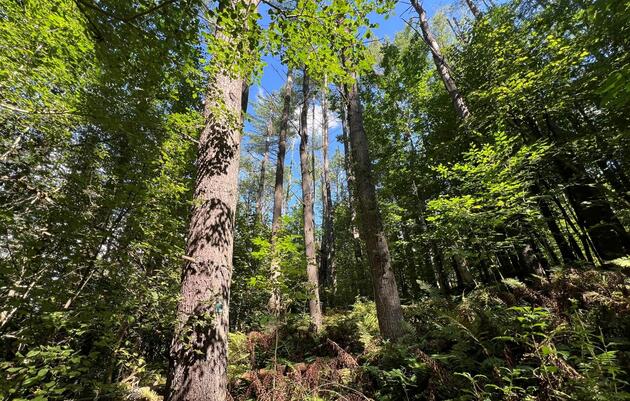
If you walk the trails at the Green Mountain Audubon Center this winter, you may notice that the sugarbush—the stand of trees we tap each spring for maple syrup—looks a little different than it has recently.
Beginning mid-February, Audubon Vermont will be working with the Vermont Youth Conservation Corps to carry out a small, carefully planned forest stewardship project before sugaring season gets underway. The intention is not to change the character of the forest nor produce timber, but to help it continue growing as a healthy, diverse, and resilient place—one that supports birds and wildlife, outdoor learning, and sustainable maple production for years to come.
Just as people benefit from regular health checkups, forests do too. Ecologists and foresters regularly assess forest conditions and compare what they see to what we would expect in a healthy, functioning forest. From there, they identify risks, opportunities, and simple steps that can help the forest move in a better direction. At the Green Mountain Audubon Center, this happens every ten years. In Vermont, where our forests are still rebounding from 19th-century wide-scale deforestation, thoughtful intervention is one strategy for restoring the complexity of the forests that once covered the landscape.
Our most recent assessment highlighted a few places where the sugarbush could use some support: a healthier next generation of maple trees, more young growth near the forest floor, more down and standing dead wood for wildlife, and a broader mix of tree species overall. Increasing diversity also helps prepare the forest for a changing climate. Some species are expected to fare better than others in warmer conditions, so encouraging a wider mix now helps mitigate future risk.
The Green Mountain Audubon Center's sugarbush is many things at once: an outdoor classroom, a place for quiet walks, a working sugarbush, and important bird habitat. Our approach is guided by Audubon’s Bird-Friendly Maple program and bird-friendly forestry principles that shape all of our forest work—including the foresters we partner with through our Forester Training and Endorsement Project and the landowners we support through our Forest Landowner Technical Assistance Project. Because the forest is already in generally good condition, only a light, targeted treatment is needed. The method we chose is called crop tree release with canopy gap formation, but the idea itself is simple. It is a lot like thinning carrots in a garden, by removing a few, you give the remaining ones more light, space, and room to grow.
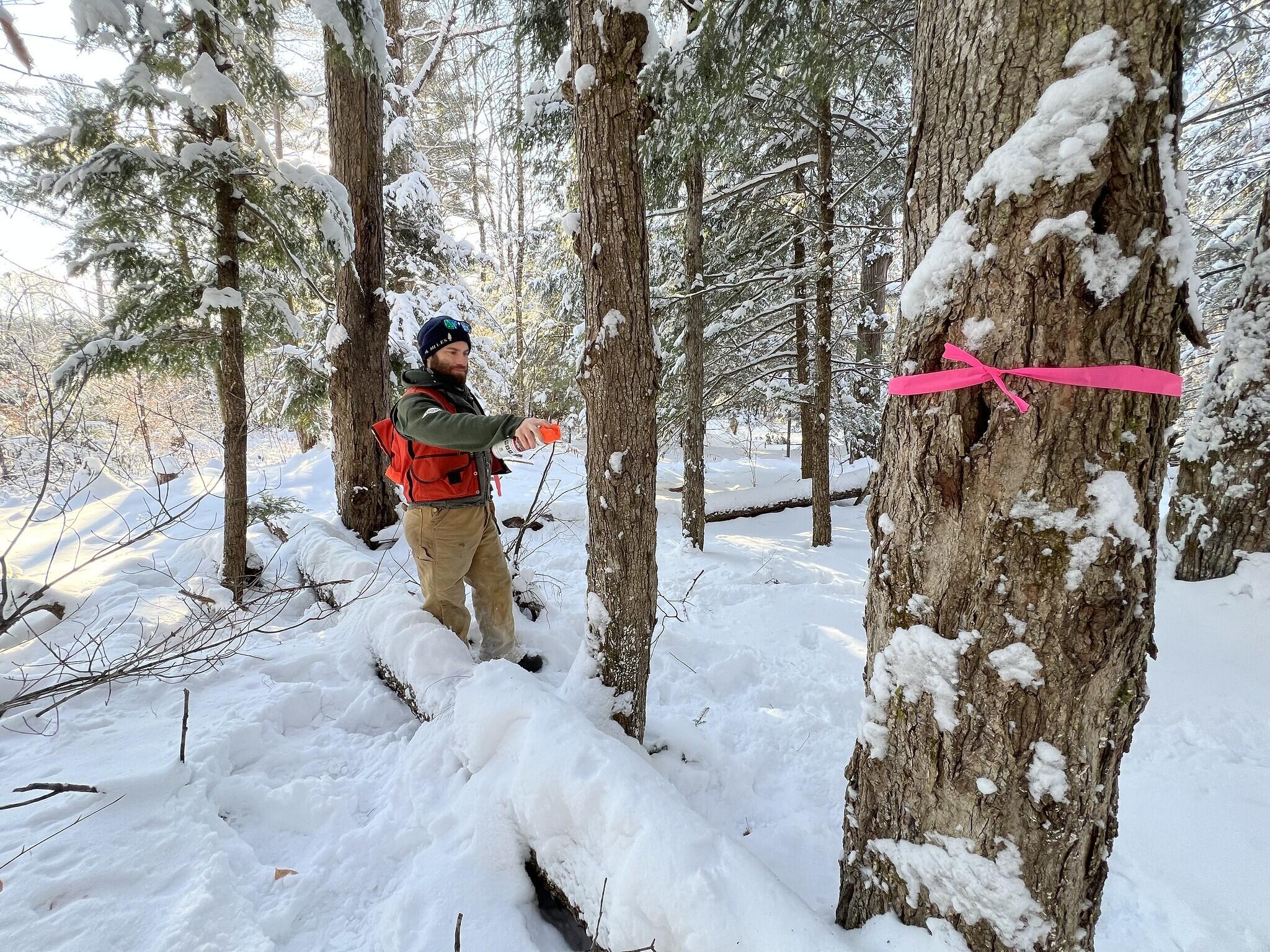
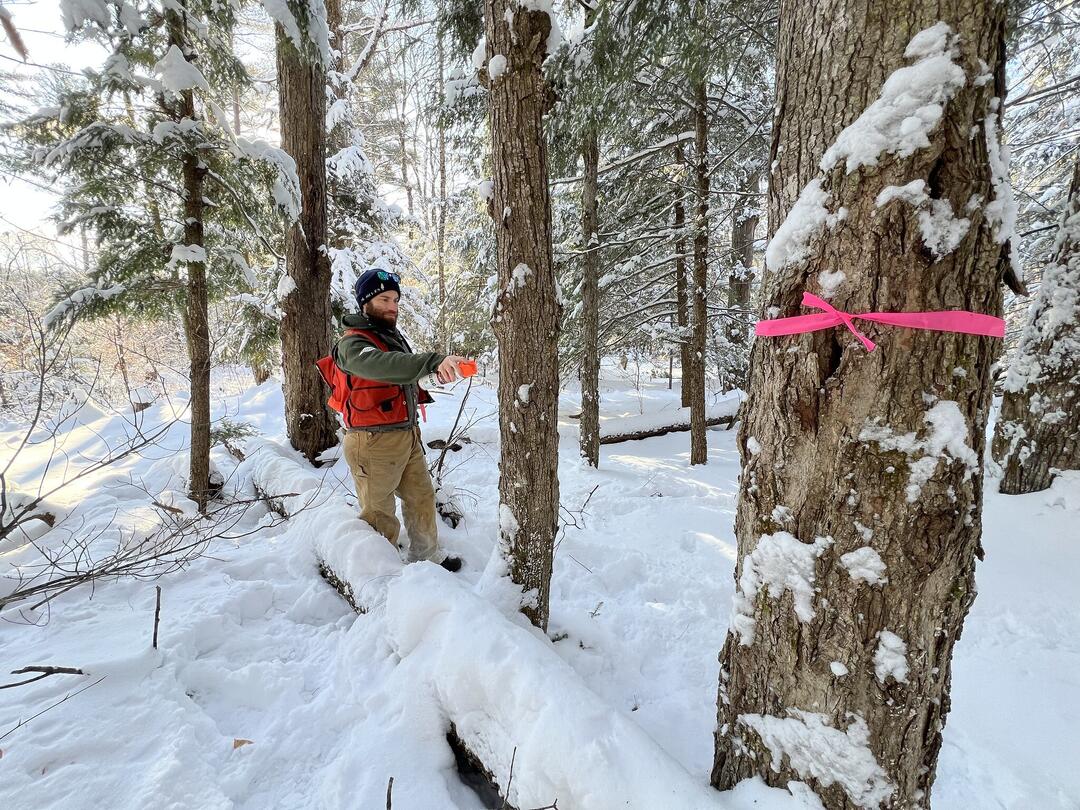
Staff first identified “crop trees”—individual trees that represent something we want more of in the forest, whether that is sap production, wildlife value, structural habitat, or long-term resilience. These include sugar and red maple, as well as yellow birch, northern red oak, black cherry, aspen, hickory, and eastern hemlock. Each of these species plays a role. Eastern hemlock is a long-lived tree that provides important habitat for birds like the Blue-headed Vireo and Black-throated Green Warbler. Northern red oak and hickory produce nuts that are an important food source for wildlife, including Wild Turkey. Yellow birch is a favorite feeding tree for warblers, which eat the insects that live on its bark. These crop trees were flagged with pink ribbon, and then a small number of nearby trees that were shading or crowding them were marked for removal with orange slashes. In this way, we are trading one tree so that several others can grow stronger.
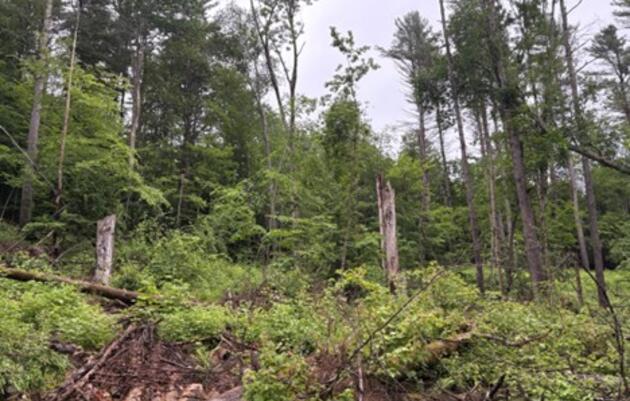
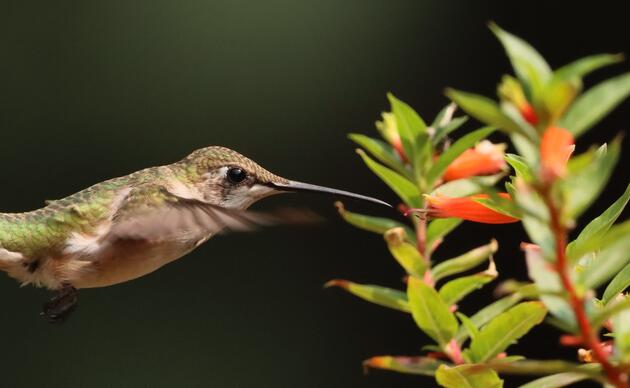
In a few areas, patches of unhealthy trees—especially beech affected by beech bark disease—are growing over young saplings of a variety of types. In these spots, we will create small openings in the canopy. This allows sunlight to reach the forest floor and helps young trees grow upward. That layer of the forest is especially important for birds such as the Black-throated Blue Warbler, Wood Thrush, and Hermit Thrush, which rely on dense, younger growth for nesting and foraging. These openings also create good hunting spaces for birds like the Eastern Wood-Pewee, which catch insects on the wing.
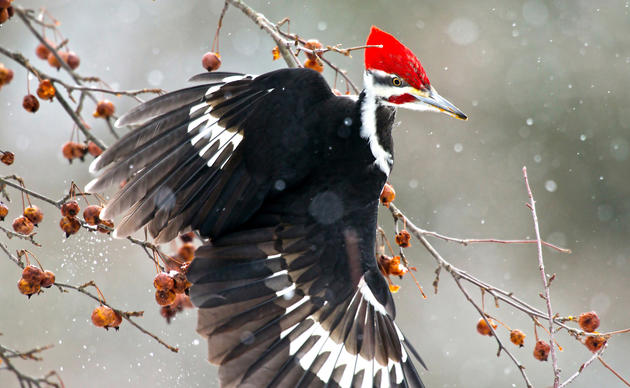
Most of the trees that are cut will be left right where they fall. While this can look messy at first, it is exactly what a forest looks like after a natural disturbance (for example, a windstorm). Downed wood creates habitat, feeds insects and fungi, shelters small animals, and even helps protect young trees from deer browse. We also work to keep standing dead trees—called snags—whenever it is safe to do so. Snags are critical for many species, including cavity-nesting birds such as woodpeckers, owls, and chickadees. Some of the cut wood will be bucked and removed to help fuel the sugaring arch.
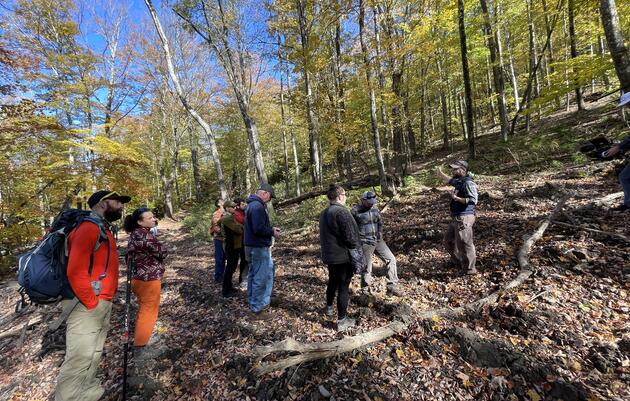
Work will begin in the eastern portion of the sugarbush near the Bailey Trail. For safety, sections of trail will be temporarily closed while crews are working. Once the project is complete, visitors will be able to walk through the area and see the results for themselves—just in time for Green Mountain Audubon’s Center’s Sugar on Snow events on March 21st and 22nd.
In many ways, this work simply helps the forest do what it already knows how to do over long periods of time. Here, we are helping it along—accelerating the natural processes that move a forest toward greater health and resilience. Alongside our strategy of letting forests be where they are already thriving—which occurs on the majority of the acres at the center—active stewardship is one of the tools we use to gently tend the land so it can grow, recover, and endure. This diverse and blended approach underpins Audubon Vermont’s forest programs and guides stewardship at the Green Mountain Audubon Center.